


Extractor
Advantages of Automatic Extraction Systems Compared to Manual Extraction
With technological advancements, automatic extraction systems have become a preferred option for laboratories seeking higher efficiency, accuracy, and safety in solvent extraction processes.
Superior Accuracy and Stability
Manual extraction was previously used widely due to its low cost and relatively simple operation. However, when performing solvent extraction manually, many factors can introduce variation, including operator technique, temperature fluctuations, heating rate, and inconsistent extraction time. Automatic extraction systems are designed to fully control these parameters.
The system handles the entire extraction sequence, including heating, refluxing, rinsing, and collecting the extract. As a result, the outcomes offer high repeatability and minimal error. This is particularly valuable for fields requiring high accuracy, such as pharmaceuticals, chemistry, and environmental analysis.
Time Savings and Higher Operational Efficiency
A major limitation of manual extraction is the long processing time and the need for continuous monitoring. Automatic extraction systems allow users to set up the workflow and let the equipment operate autonomously without constant supervision. Operators can focus on other tasks while the system processes solvent extraction. This significantly increases the number of samples processed per day, making it suitable for laboratories with heavy workloads.
During solvent extraction, risks of spills or fire hazards are always present. Operators may also be exposed to harmful solvent vapors such as hexane, ether, or toluene. Automatic extraction systems use a sealed design to minimize solvent vapor release.
Some models also include solvent recovery capabilities, reducing solvent consumption and lowering environmental emissions. This is an advantage that manual extraction methods cannot easily achieve.
Optimized Solvent Usage and Lower Operating Costs
Manual extraction often consumes large amounts of solvent due to limited control over consumption levels. Automatic extraction systems typically require less solvent, reducing material costs.
Over time, this saving becomes substantial, especially when working with high cost solvents.
Manual extraction requires experienced technicians to maintain consistent temperature, timing, and handling techniques. Automatic extraction systems allow predefined settings based on standard parameters, enabling multiple operators to run the equipment consistently from the start.
The extraction workflow therefore becomes more uniform and less dependent on individual skill.
A Suitable Choice for Modern Laboratories
Automatic extraction systems can be considered a strategic investment for QC and R D laboratories that demand high throughput and strict accuracy. Although the initial cost is higher, the time savings, improved safety, and reduced solvent consumption help offset the investment quickly.
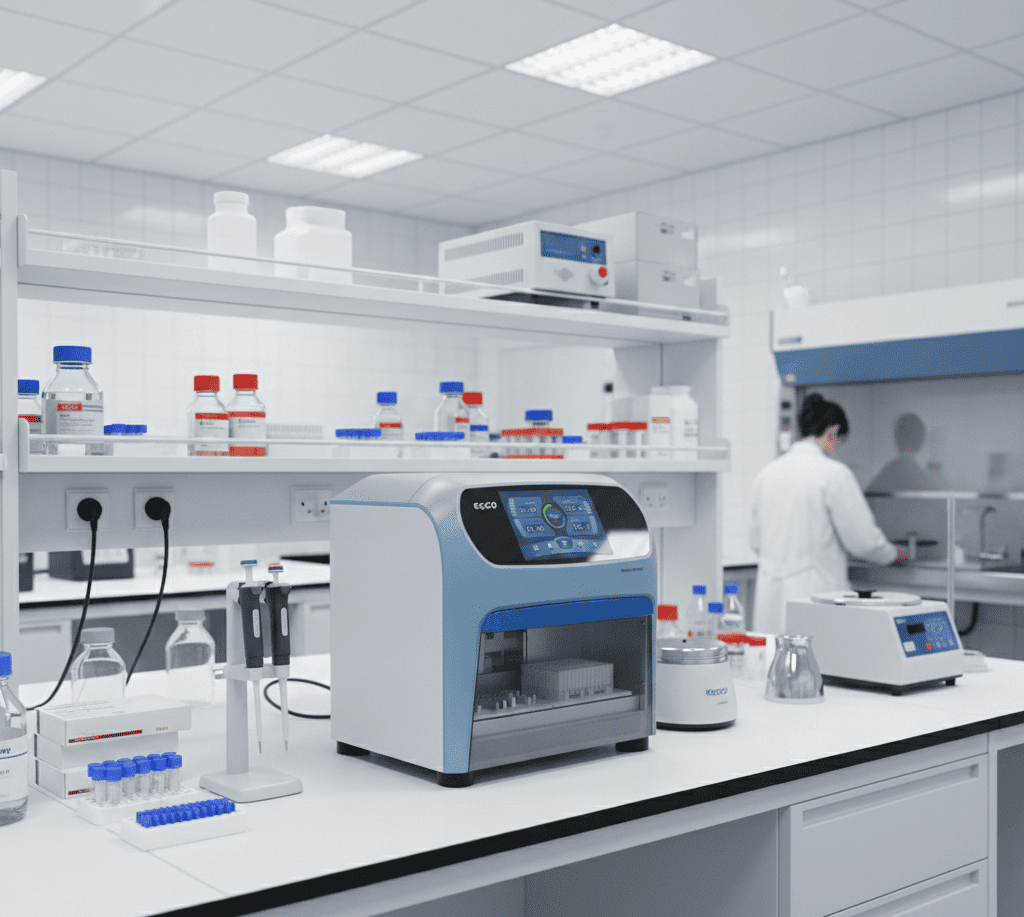
Today, users have access to a wide range of equipment supporting solvent extraction, from basic analytical requirements to advanced research applications. Notable examples include the fully automatic ESCO SWT EXT 32 nucleic acid extraction system for medical and pharmaceutical use, the Bonnin BSXT-06 extractor with six positions for food, grains, and edible oils, and the Cole Parmer EH 200 6 EU heated extraction system for high temperature solvent extraction in chemical, pharmaceutical, and petrochemical applications.
With a diverse equipment portfolio and detailed technical support, EMIN provides optimized solutions for various solvent extraction workflows, enabling laboratories to enhance accuracy, reduce error, and increase operational efficiency.
-
-
-
-
-
-
-
-
-
-
-
-
-
-
-
-
-
-
-
-
-
-
-
-